How to Reduce Skin Redness Fast?
Your skin’s best friend is here! Discover a serum made to support hydrated, healthy-looking, glowing skin while keeping your skincare routine simple and friendly.
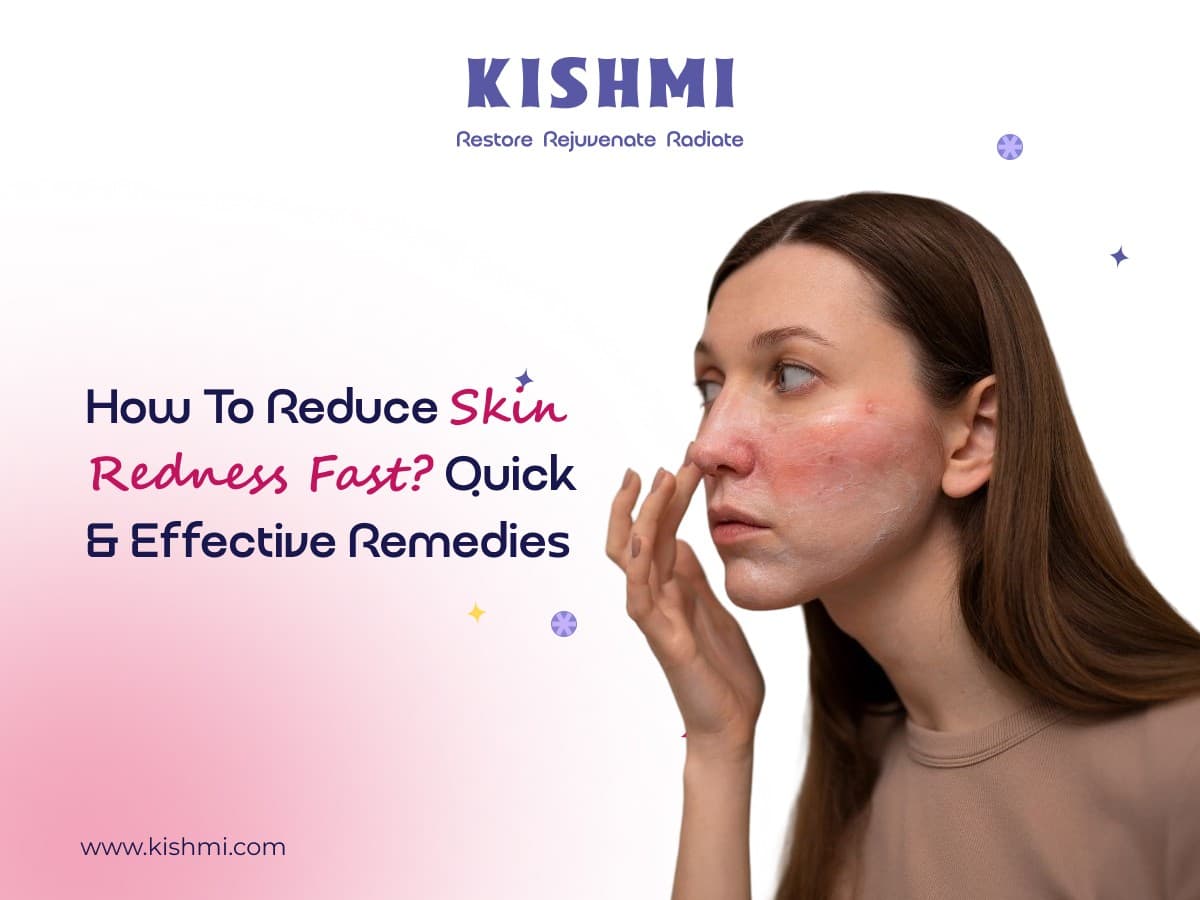
How to Reduce Skin Redness Fast? Quick & Effective Remedies
You look in the mirror and suddenly notice red cheeks, an irritated nose, angry-looking acne, or patches that seem to have appeared overnight.
And your first thought is probably:
“What happened to my skin?”
Skin redness is extremely common. It can happen after a hot day outside, a new skincare product, a breakout, shaving, over-exfoliation, dryness, or simply because your skin barrier is having a bad day.
The good news? Mild, temporary redness can often be calmed with the right skincare habits.
But here’s the important part: reducing redness isn't always about finding the strongest product or applying five different soothing ingredients at once. In many cases, your skin needs the opposite: less irritation, more hydration, and a little patience.
So, if you're wondering how to reduce skin redness fast, let's break down what causes it, what you can do at home, what products to avoid, and when redness may need professional attention.
What Causes Skin Redness?
Before trying to get rid of redness, it helps to understand why your skin is turning red.
Redness is essentially your skin reacting to something. Your blood vessels can widen in response to heat, irritation, inflammation, or other triggers, making the skin appear red or flushed.
Some of the most common causes include:
1. Sun Exposure
That afternoon outing without sunscreen? Your skin may remember it longer than you do.
UV exposure can irritate the skin and cause redness, warmth, dryness, and eventually sunburn. Even if you don't experience an obvious burn, repeated sun exposure can contribute to inflammation and uneven skin tone.
For Indian skin, daily sunscreen is especially important because we experience significant sun exposure year-round.
2. Acne and Breakouts
A fresh pimple can look red, swollen, and irritated because acne involves inflammation.
And let's be honest the urge to touch it doesn't help.
Picking, squeezing, or repeatedly touching acne can increase irritation and may increase the chances of post-acne marks.
If your redness is mainly around active pimples, your goal shouldn't simply be to "remove the redness overnight." Instead, focus on calming inflammation and avoiding further irritation.
3. Using Too Many Active Ingredients
This is one of the most common skincare mistakes.
You use:
- Vitamin C in the morning
- Salicylic acid
- Glycolic acid
- Retinol
- Scrub
- Face mask
- Another exfoliant
And then wonder why your face is suddenly saying, “Please stop.”
Active ingredients can be useful, but using too many irritating products or introducing them too quickly can compromise your skin barrier.
A damaged or irritated barrier can make your skin feel dry, tight, sensitive, itchy, or visibly red.
4. Over-Exfoliation
Exfoliation can help remove dead skin cells, but more exfoliation does not mean better skin.
Using chemical exfoliants too frequently or scrubbing your skin aggressively can cause irritation.
If your face feels unusually sensitive after exfoliating, that's a sign to take a step back.
5. Dry or Dehydrated Skin
When your skin lacks enough moisture, it can become rough, tight, flaky, and more sensitive.
Dryness doesn't necessarily cause all redness, but it can make irritation easier to trigger and more noticeable.
That's why hydration is an important part of calming irritated-looking skin.
6. Heat and Weather
Indian summers can be brutal.
Heat, humidity, sweat, and prolonged sun exposure can all contribute to temporary facial flushing.
You may notice your face becoming red after exercising, travelling in the heat, or spending hours outdoors.
This type of redness often improves once your body cools down.
7. New Skincare Products
Trying a new product can sometimes cause irritation, particularly if your skin is sensitive or the formula contains ingredients your skin doesn't tolerate well.
That's why introducing several new products at once isn't a great idea.
If your skin reacts, you'll have no idea which product caused the problem.
How to Reduce Skin Redness Fast
Now let's get to the part you've been waiting for.
What can you actually do when your skin suddenly looks red?
Here are some simple steps that can help calm mild irritation.
1. Stop Using Irritating Products Temporarily
The first step isn't adding another product.
It's removing the possible trigger.
If your skin suddenly becomes irritated after introducing a new active, exfoliant, scrub, or treatment, stop using it temporarily.
Give your skin some breathing room.
For a few days, your routine can be extremely simple:
Gentle cleanser → moisturiser → sunscreen
That's it.
Your skincare shelf doesn't need to participate in every crisis.
2. Use a Cool Compress
A cool compress can provide temporary relief when your skin feels hot or irritated.
Take a clean, soft cloth, dampen it with cool water, and gently place it over the affected area for a few minutes.
Don't press aggressively.
And avoid putting ice directly on your skin. Extremely cold temperatures can irritate the skin further.
The goal is cool and soothing, not freezing your face.
3. Hydrate Your Skin
When your skin barrier is irritated, hydration becomes especially important.
Look for a gentle moisturiser that helps reduce dryness and supports the skin barrier.
Ingredients commonly found in barrier-supportive skincare include:
- Glycerin
- Ceramides
- Panthenol
- Hyaluronic acid
- Squalane
You don't necessarily need all of them.
The important thing is finding a moisturiser that your skin tolerates comfortably.
4. Apply Sunscreen Every Morning
If you're dealing with redness, sunscreen isn't optional.
UV exposure can worsen inflammation and contribute to long-term uneven pigmentation.
Choose a broad-spectrum sunscreen with SPF 30 or higher and apply it every morning.
And yes, even if you're staying most of the day indoors, sunscreen can still be useful depending on your exposure to sunlight.
If you're spending time outdoors, remember that sunscreen needs to be reapplied, especially after sweating or prolonged sun exposure.
A Simple Routine for Red, Irritated Skin
If your skin is currently feeling angry, here's a simple routine to consider.
Morning
Step 1: Gentle Cleanser
Use a mild cleanser that doesn't leave your skin feeling tight.
Step 2: Moisturiser
Apply a comfortable moisturiser to support hydration.
Step 3: Sunscreen
Finish with broad-spectrum SPF 30 or higher.
Night
Step 1: Cleanse
Remove sunscreen, makeup, sweat, and dirt with a gentle cleanser.
Step 2: Moisturise
Apply your moisturiser generously enough to keep your skin comfortable.
Step 3: Leave It Alone
This step is underrated.
You don't always need another serum.
Sometimes your skin just needs a quiet night.
What If Redness Keeps Coming Back?
If your skin is frequently red without an obvious reason, don't keep experimenting with random skincare products.
Persistent redness can have different causes, including conditions such as rosacea, eczema, contact dermatitis, or other forms of skin inflammation.
If redness is persistent, painful, itchy, swollen, spreading, or accompanied by other unusual symptoms, it's a good idea to speak with a dermatologist.
Professional advice becomes especially important if you notice:
- Frequent flushing
- Persistent facial redness
- Burning or stinging
- Severe itching
- Swelling
- Peeling
- Painful skin
- Redness that doesn't improve
- Repeated reactions to skincare products
Sometimes the answer isn't another serum.
Sometimes it's getting the right diagnosis.
Final Reminder
Red skin doesn't always need more skincare.
Sometimes it needs:
Less.
Gentler.
Simpler.
Consistent.
Listen to your skin, protect your barrier, and give it time to recover.
Because your skin isn't asking for perfection.
It's asking you to be its best friend.
stay tune; your skin's best friend is coming soon at @kishmi.com
Comments
Loading comments…